Lacks healthy plant life
With almost no native aquatic plants left, nothing competes with algae or holds sediment in place.
About Silver Lake
Silver Lake sits in the Rice Creek Watershed District, straddling Columbia Heights and St. Anthony. Here is what the water looks like today.
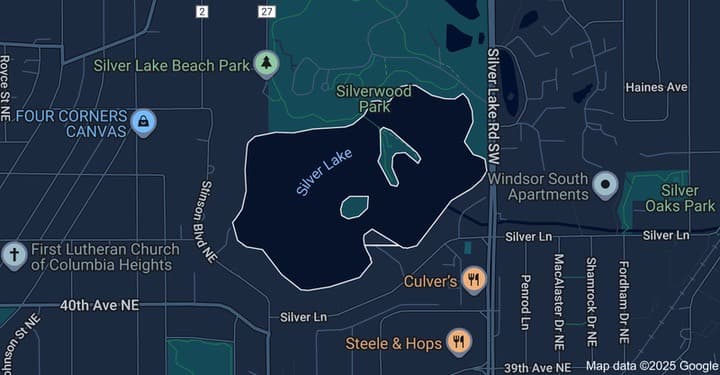
Silver Lake habitat
None
That empty column is the whole problem. With no native aquatic plants to compete, algae and invasives have the lake to themselves.
Water quality assessment
Status
Impaired
Lake health score
40 / 100
Lake health grade
D+
Water quality score
23 / 100
Biology score
26 / 100
Hydrology score
71 / 100
Scores are drawn from the 2026 Silver Lake Improvement Strategy, prepared with the Rice Creek Watershed District and the Minnesota DNR.
Why Silver Lake is in trouble
Silver Lake is facing environmental threats, primarily low biodiversity of plant species, leading to algae blooms that harm water quality and promote invasive species like Eurasian watermilfoil.
Various initiatives — holding ponds, stormwater drains, barriers, and buffer zone landscaping — have been implemented to improve water quality and reduce contaminants. However, more comprehensive measures are needed to address the root causes of these issues.
Protecting the lake is crucial for its natural beauty and safe recreational use. Community involvement and sustainable practices are essential for its preservation for future generations.
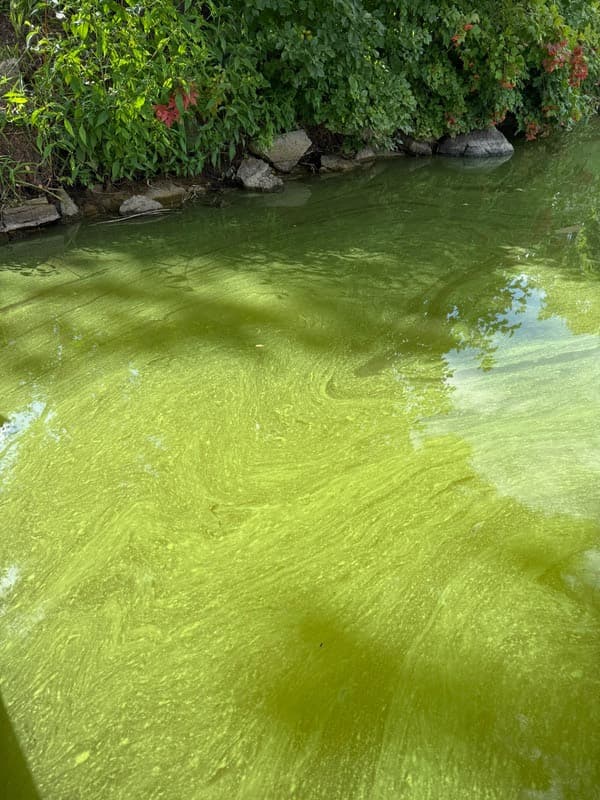
With almost no native aquatic plants left, nothing competes with algae or holds sediment in place.
Eurasian watermilfoil, curlyleaf pondweed and common carp crowd out natives and stir up nutrients.
Lawn chemicals, road salt and storm drain debris run straight off the neighborhood into the lake.
Knowing the diagnosis is only useful if it changes what we do next.
See the restoration strategy